David Fincher Says Brad Pitt's Cliff Booth Could Be His Last Movie: 'I'm 64'
The director of Se7en, Fight Club and The Social Network says he no longer has the patience, wants to be in bed by 8 p.m. and might be done, days after an AI backlash hit The Further Mis-Adventures of Cliff Booth.
Add Zurnt as a preferred source on Google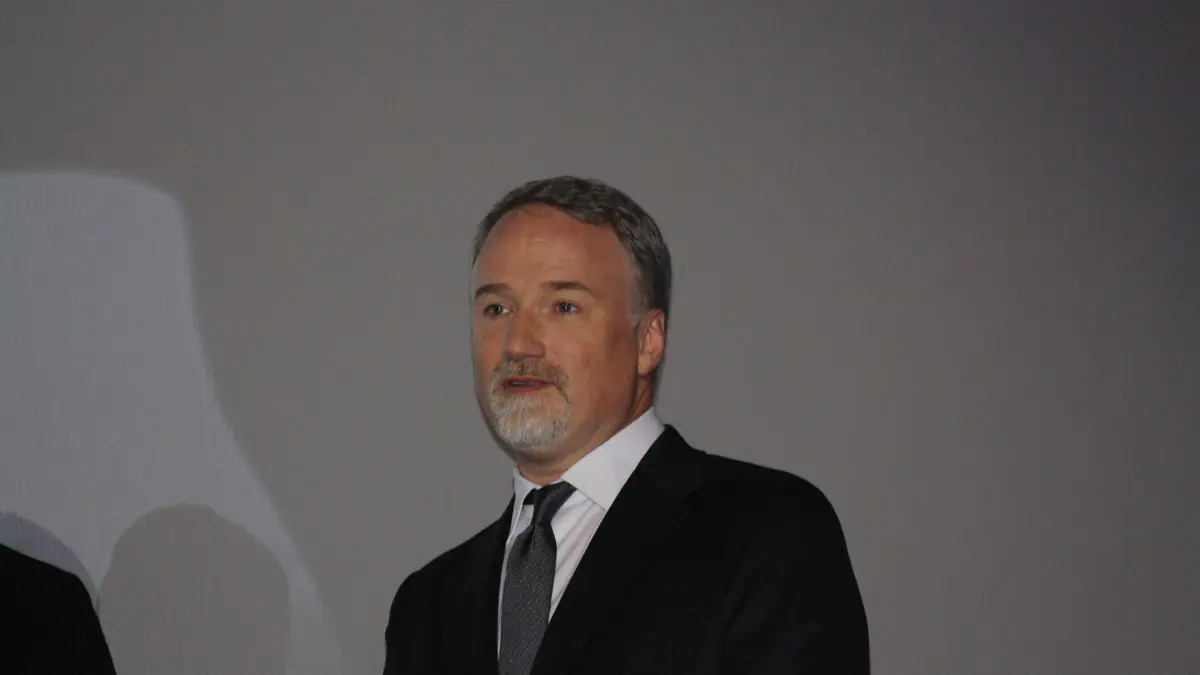
- David Fincher, 64, told The Ringer's Big Picture podcast that The Further Mis-Adventures of Cliff Booth could be "my last movie."
- The Brad Pitt film, written by Quentin Tarantino, opened Nov. 25 in about 250 IMAX theaters and streams on Netflix Dec. 23.
- It is his 13th feature. His first 10 theatrical films grossed about $2.14 billion worldwide.
- The comments came days after critics accused the film of "blatant" generative AI use, which Fincher called a "culture war."
David Fincher, the perfectionist behind Se7en, Fight Club and The Social Network, says his new Brad Pitt movie may be the last film he ever makes.
"In all seriousness, I could see this being my last movie," Fincher said on The Ringer's The Big Picture podcast, hosted by Sean Fennessey, according to Deadline.
He was quick to say the film, The Further Mis-Adventures of Cliff Booth, was not the reason. "Not because I hated it or not because people didn't get it, but you know, I'm 64," he said. "And I've been directing since I was 20."
'It's eight o'clock at night. I need to be in bed'
The director, famous for demanding dozens of takes, said the old drive has faded.
"I worry about my priorities changing. I mean, my priorities have already changed," Fincher said, per Deadline. "I don't have as much patience as I once had, and my priorities have expanded, if not changed."
He described long days on the Cliff Booth shoot. "I don't wanna work more than 10 hours," he said. "I mean, we work 12-hour days on this, you know? It's eight o'clock at night. I need to be in bed."
"I don't want to be special. I just want to be left alone," he added, according to World of Reel.
When Fennessey pressed him at the end of the interview to promise Cliff Booth would not be his final film, Fincher replied, "Okay. Okay." The A.V. Club read the answer as sarcastic and called the retirement talk probably unserious.
A war on 'wasteful' moviemaking
Fincher used the interview to attack how Hollywood works.
"I feel like, a hundred years into making cinema, there has to be a reckoning," he said, calling "the idea of trying to industrialize the process" "the greatest disservice that's ever been done to cinema."
"For 100 years, there has been a knee-jerk, which is if you have a real problem, throw manpower at it," he said. "Well, in the 21st century, that's no longer the solution."
"Moviemaking is inherently wasteful, and it doesn't need to be," he said. And in a line that will not calm crew unions: "I'm not anti-humanity and I'm not anti-paying people to do work."
The AI fight hanging over the film
The retirement talk lands in the middle of the ugliest week of the film's rollout.
After early screenings, viewers accused Cliff Booth of using generative AI. Indie filmmaker Patrick Tomasso wrote on X that he left "completely gutted," calling it "some of the most blatant and egregious AI use I've ever seen in a studio film," TheWrap reported.
Writer Louis Peitzman wrote in a Letterboxd review that "the use of generative AI depresses the hell out of me," and noted a generative AI supervisor in the credits. The site Next Best Picture called Fincher's AI use in key moments "nothing but an eyesore."
Fincher has not backed down. "I'm not a Luddite, so I don't fear the unknown," he told the Los Angeles Times. "Well, it exists. Should we not use it?"
To Spain's El País, he went further: "The debate over AI masks a culture war; it has nothing to do with movies."
On the Big Picture podcast, he said automated dialogue replacement covered roughly 5% of the film and that AI helped match a performer's best audio take to their best on-camera take, according to Mandatory.
Netflix did not respond to TheWrap's request for comment on the AI claims.
The film, and the money
Cliff Booth is a standalone sequel to Tarantino's Once Upon a Time in Hollywood (2019), which won Pitt his Oscar for playing the stuntman. Set in 1977, eight years later, it finds Cliff working as a projectionist and moonlighting as a Hollywood fixer, pulled into a conspiracy involving a Filipino gang and a stolen Oscar, Deadline reported.
Tarantino wrote it after deciding not to direct it himself. Pitt brought it to Fincher, their fourth film together after Se7en, Fight Club and The Curious Case of Benjamin Button.
The cast includes Elizabeth Debicki, Scott Caan, Yahya Abdul-Mateen II, Carla Gugino, Peter Weller as Cliff's father and Timothy Olyphant, with Tarantino as narrator. The film runs 143 minutes.
Netflix gave it an exclusive two-week IMAX run, a first for the streamer, starting Nov. 25. It took an estimated $910,000 to $1 million on opening day from about 251 IMAX screens, Collider reported, with projections for the five-day Thanksgiving frame between about $3.5 million and $5 million. Netflix does not report grosses, and Regal and Cinemark declined to play it.
Tarantino once put the budget "in the region of $200 million." Fincher later put the final cost at $120 million to $123 million. Pitt was reported to be paid about $40 million.
Reviews have been good, not great. The film held 77% on Rotten Tomatoes from 145 reviews and 68 on Metacritic at last count.
| Fincher feature | Year | Worldwide gross |
|---|---|---|
| Alien 3 | 1992 | $159.8 million |
| Se7en | 1995 | $327.3 million |
| The Game | 1997 | $109.4 million |
| Fight Club | 1999 | $100.9 million |
| Panic Room | 2002 | $196.4 million |
| Zodiac | 2007 | $84.8 million |
| The Curious Case of Benjamin Button | 2008 | $333.9 million |
| The Social Network | 2010 | $224.9 million |
| The Girl with the Dragon Tattoo | 2011 | $232.6 million |
| Gone Girl | 2014 | $366.9 million |
| Mank | 2020 | Netflix, minimal theatrical |
| The Killer | 2023 | Netflix, minimal theatrical |
| The Further Mis-Adventures of Cliff Booth | 2026 | IMAX run under way |
Figures are from Wikipedia's compiled box office data. Zurnt's total for the first 10 films is about $2.14 billion. Fincher has three Oscar nominations for best director, for Benjamin Button, The Social Network and Mank, and has never won.
The end of the Netflix era
Cliff Booth is also the last film under the three-picture Netflix deal Fincher signed in 2020, after Mank and The Killer, Slashfilm reported in September. His Netflix television work includes House of Cards and Mindhunter, the true-crime series whose third season never came.
That means Fincher has no announced feature after this one. If he does stop, his last two Netflix films (Mank and The Killer) will be remembered as streaming releases that barely touched cinemas, and his farewell as a 143-minute IMAX run that a chunk of the internet blamed on AI.
Hollywood has seen high-profile projects collapse this month too, from Luca Guadagnino's abandoned American Psycho to William Shatner's feud with John Carpenter.
What happens next
Studio estimates for the Thanksgiving weekend are due Sunday, Nov. 29, with actuals on Monday, though Netflix may not publish them. The two-week IMAX run ends in early December.
Tarantino's novelization, The Adventures of Cliff Booth, is due from HarperCollins on Dec. 8. The film streams worldwide on Netflix on Dec. 23, which is when its real audience, and the real AI verdict, will arrive.
Whether Fincher directs again is, by his own account, an open question.
Read next
 Hollywood
Donald Trump Jr. Blasts Netflix's Lesbian 'Thanksgiving Plate' Post, and Hands Hunting Wives a Hit
 Hollywood
Thanksgiving Halftime Shows: Wu-Tang's Last Ruckus, U2 Sings With Dead Dolly Parton
 Sports
Tyson Fury Schizophrenia Claim Pulled From Netflix Film 2 Weeks Before Joshua
 Hollywood