Falklands Oil Drilling: Argentina Loses 18-3 at Sea Court, Milei Vows 'This Is Not the Last Word'
Judges in Hamburg refused to stop the $2.1 billion Sea Lion oil project off the Falkland Islands, saying they cannot rule on who owns them. Britain calls it a vindication. Javier Milei is going after the companies instead, and the world's three biggest oilfield service firms have already walked away.
Add Zurnt as a preferred source on Google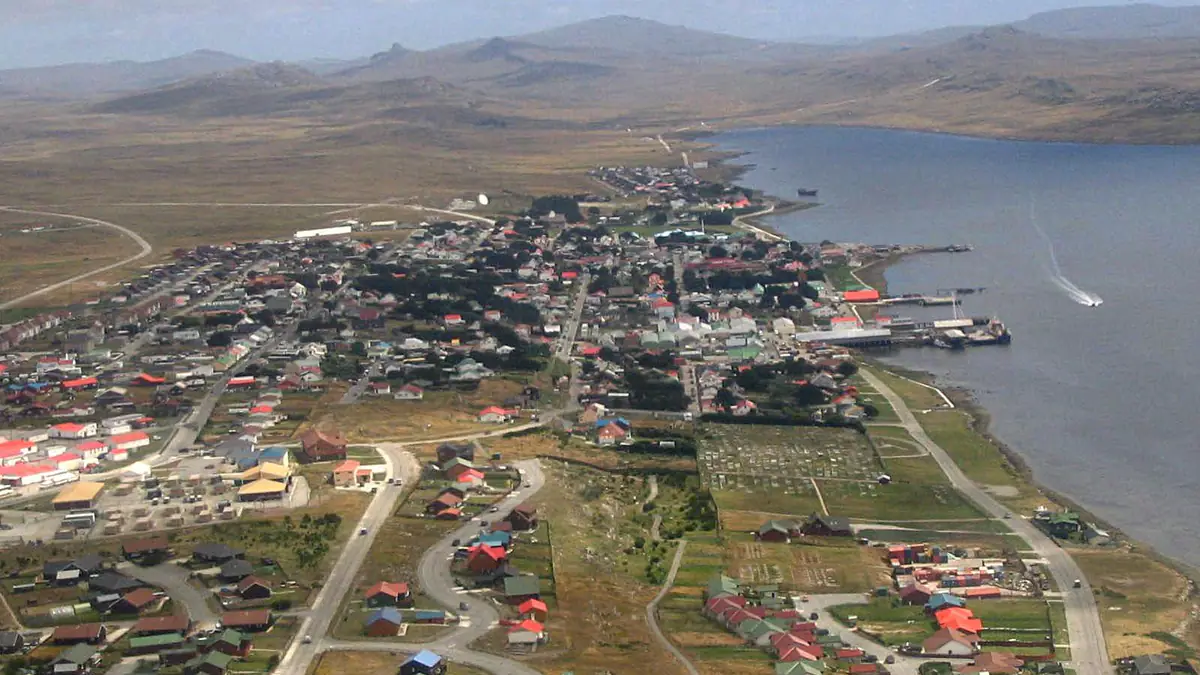
- The International Tribunal for the Law of the Sea voted 18 to 3 on Saturday, Nov. 28, to reject Argentina's request to halt the Sea Lion oil project north of the Falkland Islands.
- The judges said Argentina's case could not be decided without ruling on sovereignty over the islands, which is outside their power.
- Britain told the tribunal drilling will not start before March 21, 2027, and oil will not flow before March 2028.
- Argentina has started sanctions proceedings against five people or companies, filed criminal complaints against operator Navitas Petroleum, and warned 180 firms in 30 countries.
Falklands oil drilling can go ahead after Argentina lost its bid to freeze the project at an international court on Saturday, a defeat President Javier Milei's government immediately said "is not the last word."
The International Tribunal for the Law of the Sea, sitting in Hamburg, voted 18 to 3 to turn down Argentina's request for emergency measures against the $2.1 billion Sea Lion development, UN News reported. The field lies in waters about 140 miles north of the islands, licensed by the Falklands government and backed by Britain.
The judges' reasoning cut straight to the heart of the 200-year-old dispute. A case that "requires the determination of a question of territorial sovereignty," the tribunal said, is not one about how the law of the sea is interpreted or applied, according to UN News.
London celebrates, Buenos Aires digs in
Britain's Foreign Secretary Ed Miliband and Attorney General Ellie Reeves called the result "a vindication of the U.K.'s robust legal defence and strategy," CBS News and the Associated Press reported. They urged Argentina to respect the islanders' right to "determine their own future."
The Falklands Legislative Assembly was blunter. "This is a good day for the Falkland Islands," it said, adding that "Sea Lion will transform our economy and give future generations a more secure and self-reliant Falklands," according to CBS News.
Milei's office said Argentina "respects the court's decision, but disagrees with it." It said Argentina would move fast to set up a separate arbitration panel to hear the full case and would ask that panel for protective measures too.
Milei has called the project a "clear and present danger" to Argentina's claim and vowed to keep punishing anyone involved, the AP reported. Foreign Minister Pablo Quirno described the case as "a historic step" and promised to press on, CBS News said.
What the judges decided
Argentina launched arbitration against Britain under the UN Convention on the Law of the Sea on September 28. About two weeks later it asked the Hamburg tribunal for an order stopping new drilling and production infrastructure and barring any new exploitation licences, UN News reported.
Argentina insisted it was not asking the judges to settle who owns the islands. Britain argued that was exactly what the case was about.
The tribunal tested four Argentine arguments: its sovereign rights, unilateral exploitation of shared resources, protection of the marine environment, and the duty not to make the dispute worse. It found none gave even a prima facie basis for jurisdiction, UN News said.
Even the environmental claim failed. Deciding which country has the duty to protect the sea there "would necessarily entail a decision on sovereignty," the tribunal said.
Argentina did not leave empty-handed. The tribunal formally recorded Britain's promises that drilling will not start before March 21, 2027, that extraction will not begin before March 2028, and that "no further licenses will be granted as the licensing regime is suspended." It also urged both sides to set up the full arbitral tribunal quickly and reminded them that the Convention "is applicable in the maritime areas in dispute."
The names of the three dissenting judges and their reasons were not included in the initial reports.
The money at stake
Sea Lion is the first commercial oil development in Falklands waters, after decades of exploration. Its partners took the final investment decision in December 2025.
| Sea Lion fact | Figure | Source |
|---|---|---|
| Operator and stake | Navitas Petroleum, 65% | Company announcements |
| Partner and stake | Rockhopper Exploration, 35% | Company announcements |
| Certified resources | 319 million barrels | Rockhopper, Navitas |
| Phase 1 peak output | 50,000 barrels a day | Rockhopper, Navitas |
| Funding to first oil | $1.8 billion | Rockhopper |
| Funding to completion | $2.1 billion | Rockhopper |
| Senior debt | $1 billion | Rockhopper |
| Drilling start (UK pledge) | Not before March 21, 2027 | ITLOS order |
| First oil (UK pledge) | Not before March 2028 | ITLOS order |
| Tribunal vote | 18 to 3 against Argentina | ITLOS |
At 50,000 barrels a day, Zurnt calculates, Phase 1 would produce about 18 million barrels a year. At $60 a barrel that is roughly $1.1 billion of oil annually, for a territory of about 3,500 people. Those are illustrative figures, not company forecasts, and real revenue will depend on oil prices and costs.
Milei's pressure campaign on contractors
Losing in court was never Argentina's only weapon. The real fight is over who will help build Sea Lion.
On Friday, the day before the ruling, Argentina opened sanctions proceedings against five individuals or companies, the AP reported. It warned that "those who participate in the illegitimate exploitation of our resources will have to face the consequences."
Buenos Aires has also filed criminal complaints against Navitas, the project's Israeli operator, and other firms, and sent warning letters to 180 companies and individuals in 30 countries, according to the AP.
The threat has bite because of Vaca Muerta, the giant shale formation in Patagonia where most of the world's oil service majors earn real money. Argentina's foreign ministry warned the companies it contacted that working on Sea Lion could cost them access to Vaca Muerta, The Rio Times reported.
It has worked. In early October, Halliburton told Argentine authorities that neither it nor its subsidiaries would work on Sea Lion, MercoPress reported. SLB and Baker Hughes made similar statements, meaning the world's three largest oilfield service companies have all ruled out the project.
Navitas replaced two contractors that pulled out over Argentina's threats last month, the AP reported. The companies say they remain on track for first oil in early 2028.
How the Falklands fight got here
Britain has held the islands since 1833, and Argentina has claimed them, as the Malvinas, ever since. In 1965 the UN General Assembly invited the two countries to negotiate a peaceful solution. The Falklands remain one of 17 territories on the UN's list of non-self-governing territories, UN News noted.
In 1982 Argentina invaded, and Britain retook the islands in a 74-day war that killed 649 Argentine and 255 British service members, along with three islanders.
In a 2013 referendum, more than 99 percent of islanders voted to stay British, a result Argentina rejects. Buenos Aires argues that Sea Lion breaks a UN resolution calling on both sides to avoid unilateral moves while sovereignty is disputed.
Milei took office in December 2023 sounding conciliatory about the islands. The AP reported that he has hardened his line as his popularity slips and the economy stalls ahead of his reelection bid.
What happens next
The full arbitration now moves forward. Argentina says it will set up the separate tribunal quickly and seek fresh protective measures there. No hearing dates have been announced.
Watch for the outcome of the sanctions proceedings opened on Friday against five people or firms, and for whether any more contractors walk away before the drilling window opens on March 21, 2027.
If the project holds to Britain's pledges, the first Falklands oil would flow no earlier than March 2028.
For more on the oil supply fights shaping prices, read Zurnt's coverage of the US blockade of Iran and the push to break OPEC. Elsewhere in world politics, Israel's caretaker leader has made a surprise unity offer to Gadi Eisenkot.
Read next
 World
RAF Lakenheath Drones: US Forces Turned Back a Swarm of Six Over Britain's Biggest US Base, Iran Suspected
 World
Iran Used Starlink in Attacks on US Forces, Post Says; Pentagon Says It Knows of No Such Report
 BreakingWorld
Albania Protests: Tirana Ministry Set on Fire as Police Fire Tear Gas at Crowds Demanding Rama Quit
 World